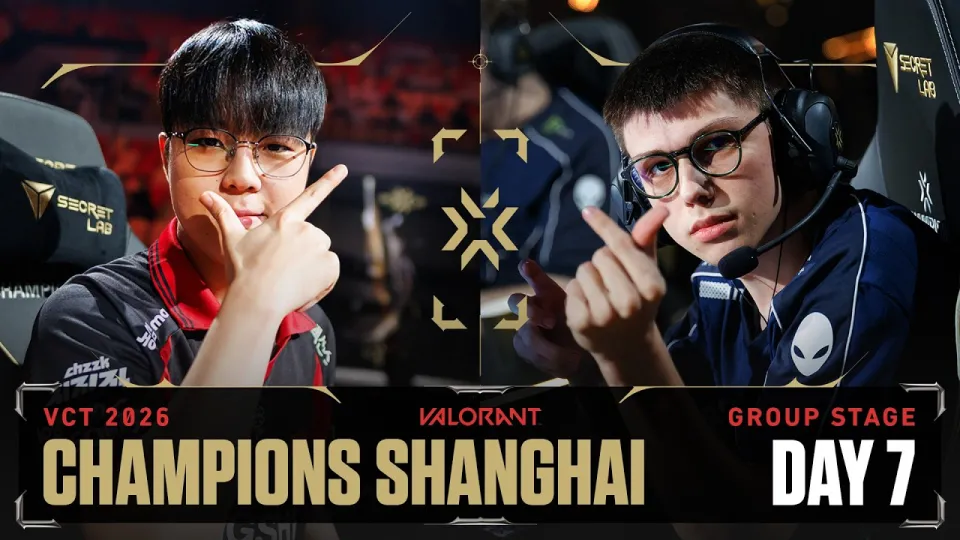
What Valorant Champions Shanghai Group Stage Day 7 delivered for the 2026 world title race
Want articles like this for your own video to promote it on YouTube and Google? Order them through the Telegram bot @sat_sit_bot. Articles with your video embedded are written and posted by the bot itself — on popular topical sites (no ads). Try it free: 50 articles on us.
· based on the channel VALORANT Champions Tour
Valorant Champions Shanghai is the final stop of the 2026 VCT season, where sixteen teams from Americas, CN, EMEA and Pacific play from September 24 to October 18 for the world title. Day 7 of the group stage, published by the VALORANT Champions Tour channel, captures the middle of that bracket: familiar rosters under pressure, a new generation of challengers, and a broadcast that kept stopping for technical issues. For schedule updates and official announcements around the event, the tournament's news feed is at the official VALORANT Esports X account.
What the Valorant Champions Shanghai format looks like
The Shanghai event is the season's biggest trophy, and the group stage is where sixteen qualified teams are cut down before the playoff bracket. The field is split across four regions — Americas, CN, EMEA and Pacific — and the group stage decides who advances and who goes home early. The broadcast description frames the stakes clearly: after two Masters events produced two different champions, the 2026 season arrived in Shanghai without a settled favourite. That matters for how Day 7 reads. Group stage results are not just about survival; they set seeding, and seeding decides which side of the bracket a contender lands on. A single lost map against a lower-seeded opponent can turn a comfortable playoff path into a run through the tournament's best teams.
Tech pauses dominated the Day 7 broadcast
The most repeated complaint under the Day 7 VOD was not about aim or strategy but about downtime. Viewers counted an "endless series of tech pauses," and one of the most-liked comments was a spoiler-blocker post that specifically warned the timestamp list might need editing because of a pause. For a viewer catching up on a full-length group stage VOD, that has a practical cost: the published timestamps drift, and skipping between maps becomes guesswork. Three things help when watching a disrupted broadcast:
- Treat community timestamps as approximate and expect a shift after any pause.
- Use the spoiler-blocked comment as a map index rather than a precise clock.
- Watch series in full if you care about momentum reads — pauses hide the tempo shifts that decide close maps.
Technical stoppages are a recurring feature of large LAN events, and they affect players too: a long pause between rounds breaks the rhythm of a team that was stringing together executes.
China's group stage problems became the story in chat
The harshest commentary under the Day 7 broadcast targeted the Chinese representatives. The recurring criticism was specific rather than general: lost eco rounds, blown 5v2 advantages, and utility usage that looked improvised once set plays broke down. One widely liked comment argued that other regions had stronger teams than the CN sides that actually qualified, while shorter replies dismissed Chinese Valorant outright. There is a fair version of that critique and an unfair one. The fair version is about adaptation: group stage Valorant rewards teams that can abandon a prepared setup mid-round and still trade efficiently, and several CN squads looked lost when the opponent disrupted their default. The unfair version ignores how thin the margin is at this level — a single eco conversion flips a map, and a flipped map changes a group table. Day 7 did not prove Chinese teams cannot compete; it showed that their round-losing mistakes were the most expensive ones on the server.
How to read a group stage VOD without spoilers
A full-day VOD is the most useful format for anyone studying pro Valorant, but it is also the easiest to get spoiled by. The most-liked comment under this broadcast was a spoiler-blocker with a hidden timestamp list, which is the standard workaround: the map index sits in replies so a viewer can jump to a specific game without seeing the result. A workable routine looks like this:
- Open the VOD, collapse comments, and find the spoiler-blocked timestamp post.
- Note the map order first, then watch one series at a time instead of the whole day.
- Watch the pistol and the first eco round of each half — that is where group stage matches are usually decided.
- Skip the pause dead air by scrubbing a minute forward whenever the observer feed freezes.
For viewers who want the competitive context rather than the full replay, the official social channels post results and bracket updates faster than a VOD can be edited.
Players and moments viewers kept replaying
Day 7 produced the kind of small details that pro-Valorant viewers hunt for. One timestamped moment that drew laughs involved a Yoru clone that briefly looked like it was helping hold a site — the sort of utility misread that only happens at high speed. Individual names also surfaced in the comments, with one reply campaigning for a veteran player in blunt terms. That mix is typical of group stage broadcasts: the highlight-reel plays are fewer than in playoffs, so the audience latches onto utility tricks, clutch attempts and personality moments instead. For teams, those same rounds are the ones coaches review — a clone that baits a rotation is worth more than a flashy ace if it wins the map.
Why the 2026 title race is genuinely open
The Shanghai bracket is unusual because the season did not produce a dominant team. Two Masters events in 2026 crowned two different champions, and the event description leans into that: new contenders, broken expectations, and a fearless generation of challengers. That is the correct frame for Day 7. When no roster has separated itself, group stage seeding becomes a weapon — the team that avoids the strongest side of the bracket can ride momentum deep. It also means the technical and mental details matter more: the squad that shrugs off a forty-minute pause and wins the next pistol round is the squad that survives a long LAN. Shanghai, a city the broadcast describes as a place where history and the future sit side by side, is a fitting venue for a tournament with no clear heir.
Useful links
- Official VALORANT Esports news and announcements: https://x.com/valorantesports
- Facebook: https://www.facebook.com/ValorantEsports/
- Instagram: https://www.instagram.com/valorantesports/
- TikTok: https://www.tiktok.com/@valorantesports
- Twitch: https://www.twitch.tv/valorant
- Event photos: https://www.flickr.com/photos/valorantesports/
- News hub: https://www.valorantesports.com/news
The takeaway from Day 7 in Shanghai
Day 7 was not a clean showcase, and that is exactly what makes it useful viewing: technical pauses, blown eco rounds and improvised utility all showed which teams can absorb disruption and which cannot. The group stage is doing its job — sixteen teams entered, and the mistakes on display are already separating contenders from passengers. The VALORANT Champions Tour channel published the full broadcast, and the spoiler-blocked timestamps in the comments remain the fastest way into the individual series. If you want the bracket and schedule without waiting for VOD edits, follow the official VALORANT Esports X account for live updates from Shanghai.
Key takeaways
- Valorant Champions Shanghai runs September 24 to October 18, with 16 teams from Americas, CN, EMEA and Pacific.
- Day 7 of the group stage was streamed by the VALORANT Champions Tour channel as a full-length VOD with a spoiler-blocked timestamp list.
- Viewers flagged a string of technical pauses that repeatedly interrupted the broadcast.
- Chinese teams drew heavy criticism from the chat for losing eco rounds and 5v2 situations.
- Two different champions were crowned at Masters events before Shanghai, setting up an open title race.
Source: VALORANT Champions Shanghai — Group Stage — Day 7 · Markdown version
Questions & answers
When does Valorant Champions Shanghai take place?
The event runs from September 24 to October 18, according to the official broadcast description. Sixteen teams from Americas, CN, EMEA and Pacific compete across the group stage and playoffs for the 2026 world title.
Why were there so many technical pauses on Day 7?
The broadcast was interrupted repeatedly by technical stoppages, which viewers noted in the comments and which forced the spoiler-blocked timestamp list to be adjusted. The VOD does not explain the cause, so treat the published timestamps as approximate and expect drift after each pause.
Are Chinese teams really the weakest region at the event?
The criticism in the comments focused on specific mistakes — lost eco rounds, blown 5v2s and weak utility usage once set plays broke. That is a fair critique of adaptation, but it does not prove CN rosters cannot compete; at this level one converted eco round can decide a map and a group table.
What is the best way to watch the Day 7 VOD without spoilers?
Use the spoiler-blocked comment with the hidden timestamp list, note the map order, and watch one series at a time. Watching the pistol and first eco round of each half gives you the rounds that usually decide group stage matches, and you can scrub past pause dead air.